Planning an event in the UAE means thinking about a hundred things: the venue, the stage, catering, security, parking and tickets. Medical cover often ends up near the bottom of the list. It should be near the top. A dedicated medical team keeps your guests safe, protects your reputation and helps you meet venue and permit rules.
This article explains why a dedicated medical team matters, what it actually does on the day, and how to plan the right level of cover for your event.
What Is a Dedicated Medical Team?
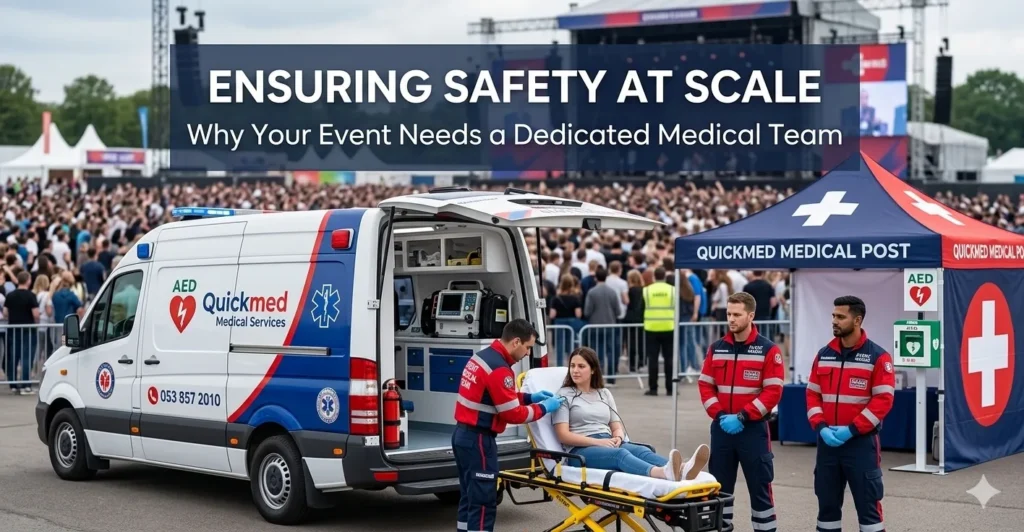
A dedicated medical team is a group of licensed healthcare professionals who are at your event for the whole time, with the single job of looking after the people there. Depending on the size and type of event, the team may include paramedics, nurses, doctors, first aid posts and an ambulance on standby.
This is different from a first aid kit in the back office or relying on calling an ambulance if something goes wrong. A dedicated medical team is already there, already equipped and already briefed when something happens.
Why Every Event Needs a Dedicated Medical Team
Medical problems happen at every event
Whenever you bring a crowd together, someone will feel unwell. Most cases are small: headaches, cuts, sprains, dehydration and fainting. Some are serious: heart problems, breathing difficulties, allergic reactions, seizures and injuries from falls or crushes. You cannot predict which, so you need to be ready for both.
Minutes really matter
In a cardiac arrest, every minute without CPR and a defibrillator reduces the chance of survival. If the nearest help is an outside ambulance making its way through traffic and event crowds, valuable time is lost. A dedicated medical team on site can start treatment straight away.
The UAE heat adds extra risk
Outdoor events in the UAE bring a real risk of heat exhaustion and heat stroke, especially for people standing or dancing for hours. A medical team plans cooling areas, water points and quick treatment, and knows how to spot heat illness early.
Venues and permits often require it
Many venues and authorities expect organisers to show a medical plan with licensed staff before an event is approved. Having a dedicated medical team with clear paperwork makes approvals smoother.
It protects your reputation
Guests remember how an incident was handled. A calm, quick response from a professional team shows that you take their safety seriously. A slow or confused response can overshadow everything else about the event.
It lets your staff focus on their jobs
When there is a medical team on site, your event staff and security do not have to make medical decisions. They know who to call and can get back to running the event.
What a Dedicated Medical Team Does on the Day
- Arrives early: sets up first aid posts, checks equipment and agrees ambulance access routes.
- Briefs with your team: meets security, operations and stewards so everyone knows how to call for medical help.
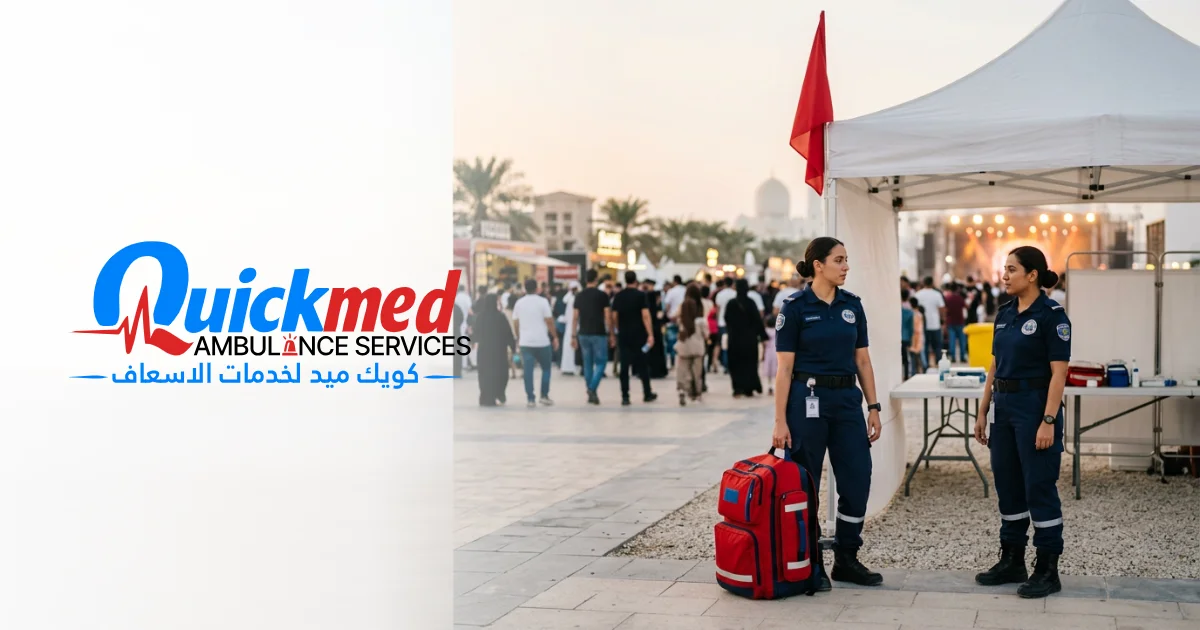
- Covers the crowd: fixed medical posts plus roaming teams who move through busy areas.
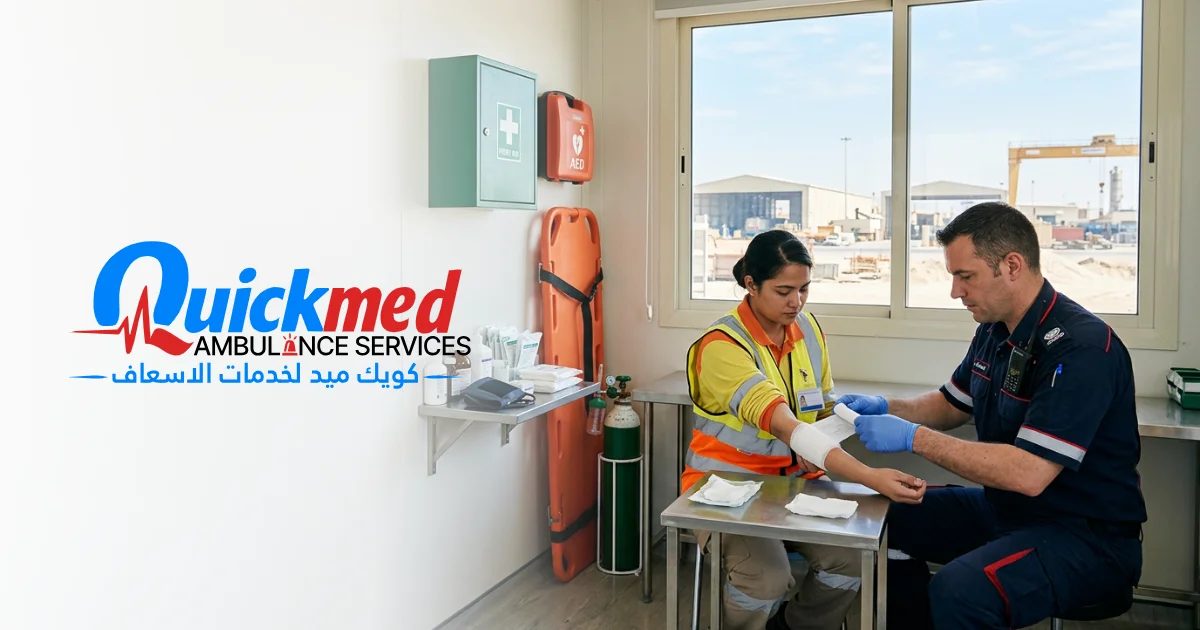
- Treats on site: handles minor injuries and illness so guests can return to the event.
- Manages emergencies: gives advanced care and arranges hospital transfer by ambulance when needed.
- Keeps records: logs every patient seen and gives you a short report after the event.
Common Medical Incidents at Events
Knowing what usually happens helps you plan. These are the incidents a dedicated medical team sees most often at events in the UAE:
- Heat exhaustion and dehydration: especially at outdoor daytime events.
- Fainting: from heat, standing for long periods, skipped meals or crowded spaces.
- Minor injuries: cuts, sprains, blisters and small burns.
- Sports injuries: muscle strains, falls and impact injuries at races and matches.
- Allergic reactions: from food, insect stings or medicines.
- Breathing problems: asthma attacks, often triggered by heat, dust or exertion.
- Chest pain and heart problems: less common, but the most serious, and where fast care matters most.
- Alcohol-related issues: at some licensed venues and late-night events.
Most of these can be treated on site in a few minutes, so the guest can rest, recover and often return to the event. That is a big part of the value a dedicated medical team brings.
The Real Cost of Not Having Medical Cover
Organisers sometimes skip medical cover to save money. It is worth thinking about what that saving can cost:
- Delays in treatment for a guest who becomes seriously ill
- Ambulances struggling to reach patients through crowds and road closures
- Event staff making medical decisions they are not trained for
- Bad reviews and social media posts about how an incident was handled
- Problems with venue approvals and permits for future events
- Possible legal and insurance questions after a serious incident
A dedicated medical team reduces every one of these risks, often for a small share of the total event budget.
How a Dedicated Medical Team Works With Your Event Team
The best results come when medical, security and operations work as one team. Before the event, your medical lead should join the planning meeting, walk the site and agree how calls for help will reach the medical team. On the day, medical staff should be on the same radio channel as security, so a steward who spots a problem can get help in seconds. After the event, a short debrief helps everyone learn and improve.
Simple things make a big difference: clear signs to first aid posts, a mention of medical points in pre-event emails to guests, and making sure every steward knows where the nearest post is.
How Big Should Your Medical Team Be?
There is no one-size-fits-all number. The right size of a dedicated medical team depends on several things:
- Crowd size: more guests means more staff and more medical posts.
- Type of event: a concert or sports event carries more risk than a seated conference.
- Duration: long events and multi-day festivals need shifts and rest breaks.
- Weather and time of day: hot afternoons need more cover than cool evenings.
- Venue layout: large or spread-out sites need roaming teams and more posts.
- Activities: sports, rides, alcohol or high-energy crowds raise the risk.
As a rough idea, a small corporate dinner might need one paramedic, while a large outdoor concert could need several medical posts, roaming teams, a doctor and more than one ambulance. A good provider will look at your event and recommend the right level of cover.
Types of Events That Need Medical Cover
- Concerts and music festivals
- Sports matches, races and tournaments
- Exhibitions, trade shows and conferences
- Corporate events and family days
- School and university events
- Religious and community gatherings
- Private parties and weddings
- Film and TV productions
How to Plan Medical Cover for Your Event
- Start early. Contact a medical provider four or more weeks ahead, or earlier for large events.
- Share the details. Date, times, venue, expected crowd, activities and a site map.
- Agree a medical plan. Staff numbers, post locations, ambulance routes and how emergencies will be handled.
- Brief everyone. Make sure security and staff know where the medical posts are and how to call the team.
- Review after the event. Use the medical report to plan even safer events next time.
What to Look for in an Event Medical Provider
- Staff who hold valid licences from the Department of Health (DOH)
- Real experience with events of your size and type
- Proper equipment, including defibrillators and oxygen
- Ambulances available on site, not just on call
- A written medical plan you can share with the venue
- Clear pricing with no surprises
Frequently Asked Questions
Is a dedicated medical team expensive?
It costs far less than most people expect, especially for smaller events. The price depends on the number of staff, hours and whether you need an ambulance. Compared with the cost of a serious incident, it is a small part of the event budget.
Can my own staff do first aid instead?
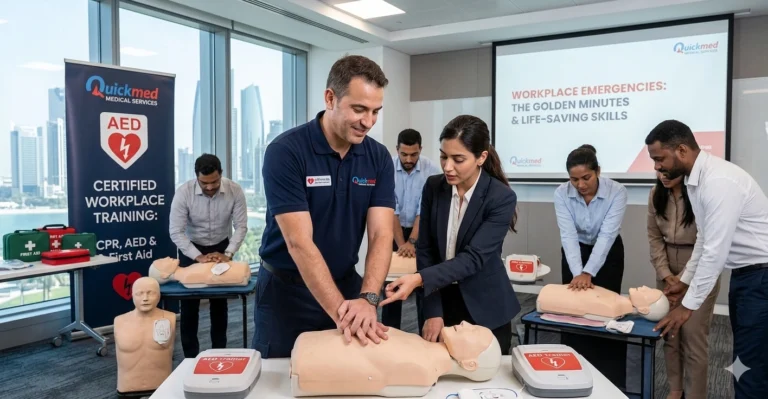
Trained first aiders are helpful, but they are not a replacement for licensed medical professionals at larger events. Many organisers have both: staff trained in first aid and a dedicated medical team for anything serious. Quickmed also offers first aid training for event staff.
Do small events need medical cover?
Even small events benefit from at least one paramedic or nurse, especially with older guests, children, sports or hot weather.
What happens if a guest needs hospital care?
The medical team treats the patient on site, then transfers them by ambulance to the nearest suitable hospital, while your event carries on.
Final Thoughts
A dedicated medical team is one of the best investments you can make in your event. It keeps people safe, keeps you compliant and keeps small problems from becoming big ones. Quickmed provides event medical services across the UAE, including paramedics, doctors, first aid posts and ambulances on standby. Contact us with your event details and we will send you a medical plan and quote.