If someone at work collapsed right now, would anyone nearby know what to do? In many workplaces the honest answer is “not really”. First aid certification changes that. It gives ordinary staff the skills and confidence to act in the first few minutes, before professional help arrives.
This article explains what first aid certification and CPR training cover, why they matter for UAE workplaces, and how to choose the right course for your team.
What Is First Aid Certification?
First aid certification shows that a person has completed a recognised first aid course and passed a practical assessment. A typical course teaches people how to:
- Check a scene for danger and call for help properly
- Give CPR to adults, children and infants
- Use an automated external defibrillator (AED)
- Help someone who is choking
- Control bleeding and treat wounds and burns
- Recognise heart attacks, strokes and seizures
- Treat heat exhaustion and heat stroke
- Support someone with a suspected broken bone
- Place an unconscious person in the recovery position
Most first aid certification is valid for one to two years, after which a refresher is needed to keep skills fresh.
First Aid vs CPR vs BLS: What Is the Difference?
- First aid: covers common injuries and illnesses, from cuts and burns to fainting and heat illness.
- CPR: focuses on what to do when someone stops breathing or their heart stops, including chest compressions and rescue breaths.
- Basic Life Support (BLS): a more detailed CPR and AED course, often required for healthcare staff and emergency responders.
For most office and site teams, a combined first aid and CPR course is the best starting point. Healthcare workers, lifeguards and response teams usually need BLS.
Why Every Workplace Needs First Aid Certification
The first few minutes decide the outcome
When the heart stops, the chance of survival drops with every minute that passes without CPR. Even in a city with good ambulance services, it takes time for help to arrive, especially in large buildings, busy traffic or remote sites. Trained colleagues can bridge that gap.
Heat is a real workplace risk
In the UAE, heat exhaustion and heat stroke are serious risks for outdoor workers, drivers and anyone working in hot conditions. First aid training teaches staff how to spot the early signs and cool someone down quickly.
It supports health and safety compliance
UAE employers have a duty to provide a safe workplace, and having trained first aiders is part of good occupational health and safety practice. Many sites, especially construction and industrial ones, are expected to have trained first aid responders on every shift.
It builds confidence and a safety culture
Staff who are trained in first aid are more likely to notice hazards, report near misses and look out for each other. That makes the whole workplace safer.
It helps outside of work too
The skills people learn stay with them. Trained staff can help family members at home, people in public places and fellow drivers on the road.
Who Should Get First Aid Certification?
- Supervisors, team leaders and site managers
- Security staff and receptionists
- Drivers and delivery teams
- Construction and industrial workers
- Teachers and school staff
- Fitness and sports staff
- Hospitality and retail teams
- Anyone named as a workplace first aider
A good rule is to have enough trained people that at least one is always available on every shift and every floor.
What Happens During a First Aid Certification Course?
Many people feel nervous before their first course. There is no need. A good first aid certification course is friendly, practical and paced for beginners. A typical day looks like this:
- Welcome and basics: how to stay safe, check the scene and call for help.
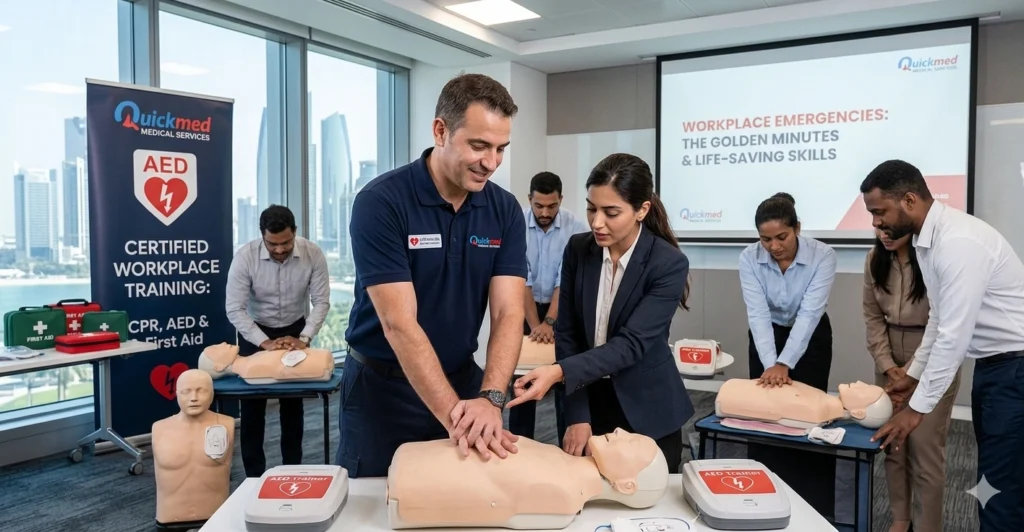
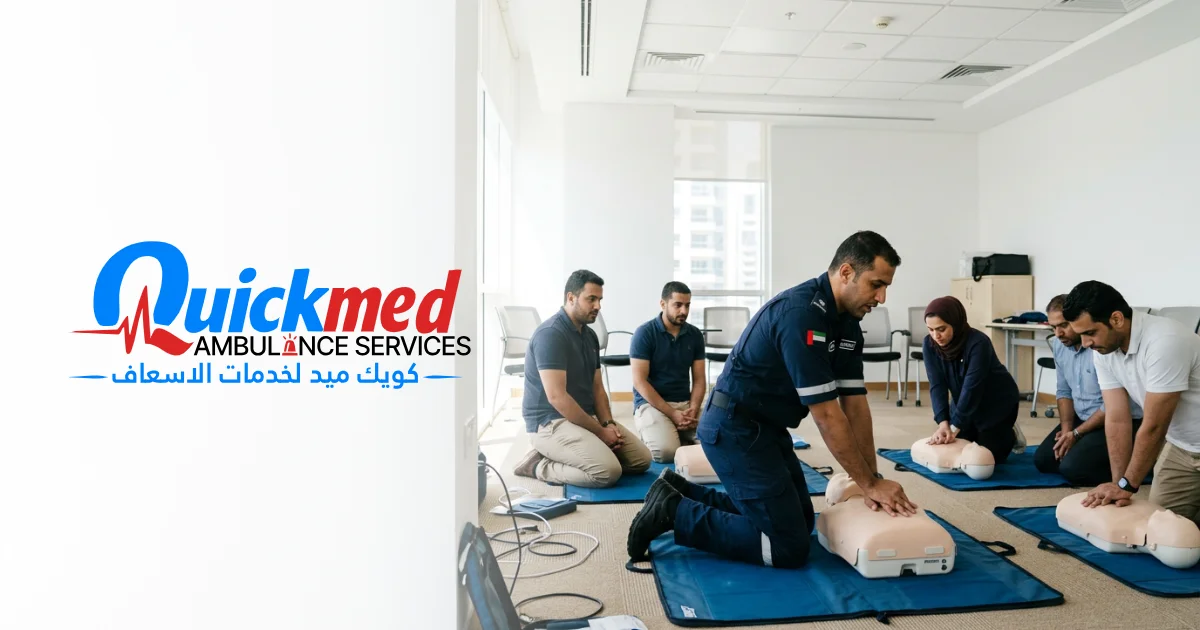
- CPR practice: hands-on chest compressions and rescue breaths on adult, child and infant manikins.
- AED practice: using a training defibrillator, step by step, until it feels natural.
- Choking: what to do for adults, children and babies.
- Bleeding, burns and fractures: practical treatment using real first aid kit items.
- Medical emergencies: spotting heart attacks, strokes, seizures, diabetic problems and allergic reactions.
- Heat illness: recognising and treating heat exhaustion and heat stroke.
- Scenarios and assessment: short role-plays where you put everything together.
By the end of the day, most people are surprised by how much more confident they feel.
Building a Workplace First Aid Plan
First aid certification works best as part of a simple plan. Here is how to put one together:
- Assess your risks: think about your work, your people and your location. A construction site needs a different plan from an office.
- Decide how many first aiders you need: cover every shift, floor and site, including holidays and sick days.
- Choose the right courses: first aid and CPR for most staff, BLS for higher-risk roles.
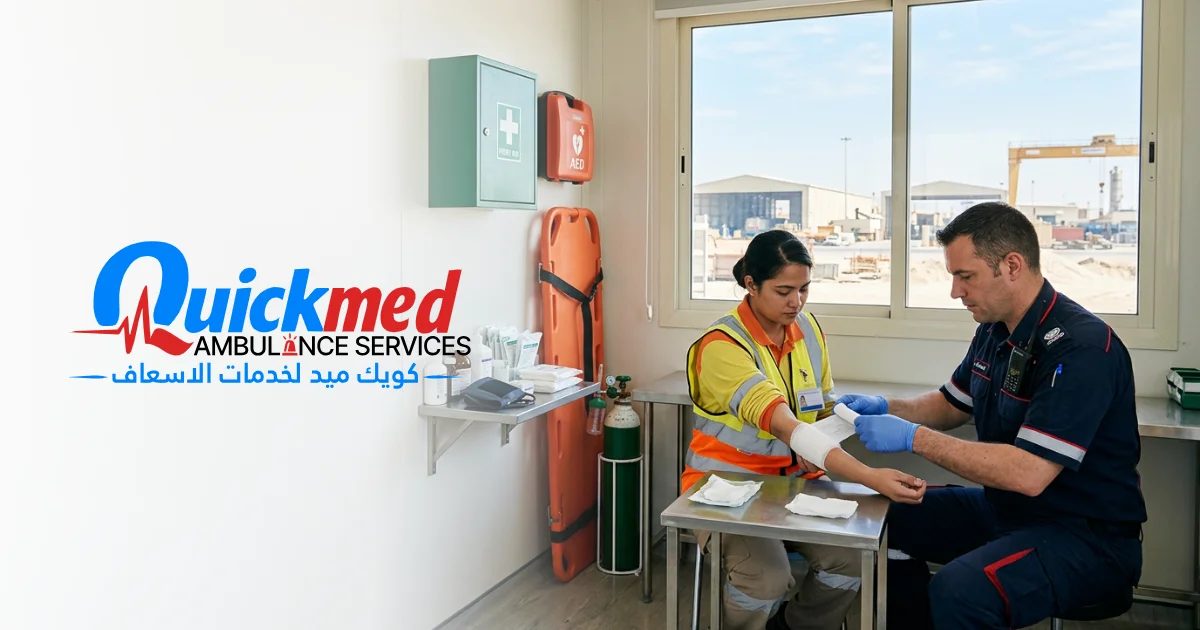
- Equip your workplace: stocked first aid kits, an AED where it makes sense, and clear signs showing where they are.
- Write down the steps: who to call, where to meet the ambulance and how to report incidents.
- Practise and refresh: short drills and refreshers keep skills sharp.
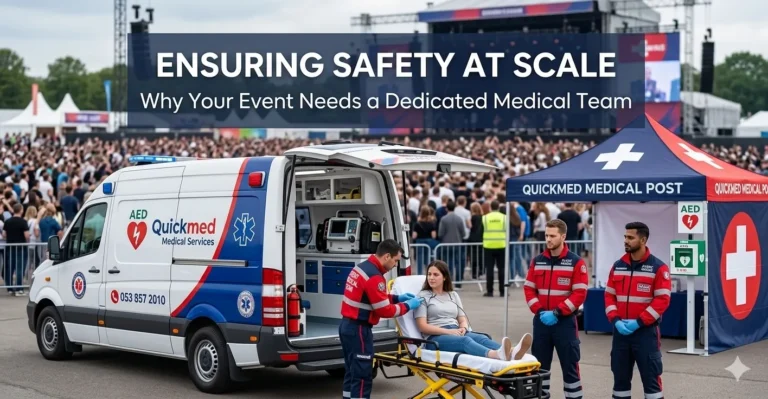
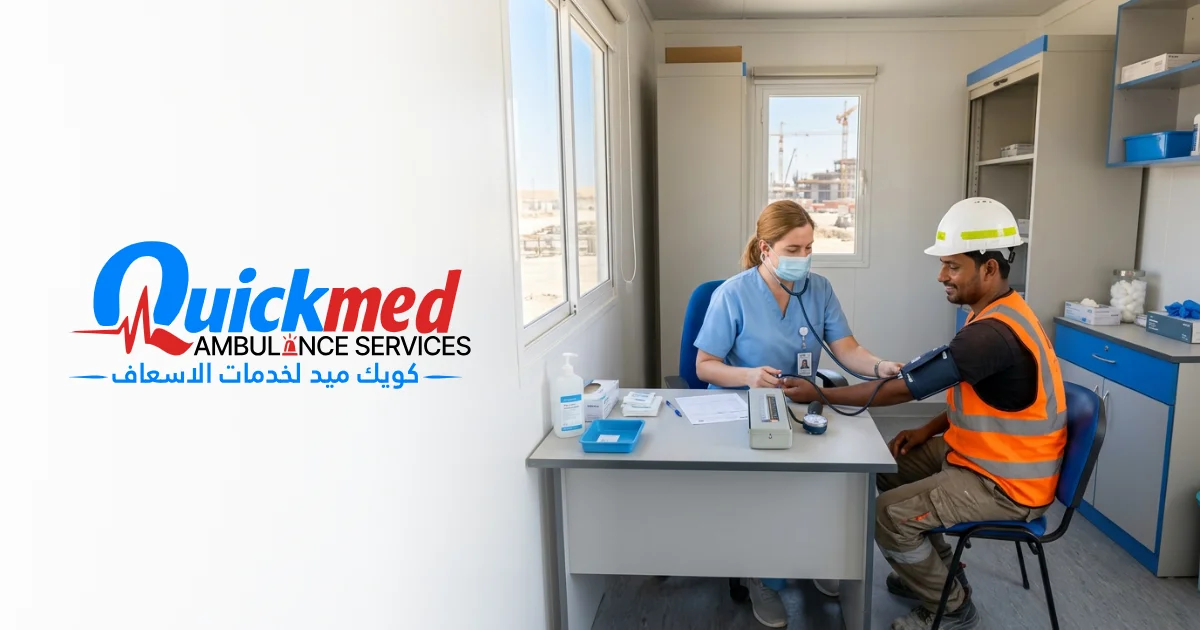
For larger sites, a staffed first aid post or on-site clinic can work alongside your trained first aiders.
First Aid Certification Myths
- “I might make things worse.” Training teaches you safe, simple steps. Doing something sensible is almost always better than doing nothing.
- “Only medical people can use a defibrillator.” AEDs are designed for the public. They talk you through each step.
- “One trained person is enough.” That person may be off sick, on leave or the one who needs help.
- “Once certified, always certified.” Skills fade, which is why refreshers matter.
How to Choose a First Aid Certification Course
- Practical focus: most of the course should be hands-on practice, not slides.
- Experienced trainers: trainers who work as paramedics or nurses bring real examples.
- Small groups: so everyone gets time on the manikins and AED trainers.
- Workplace relevance: the course should cover the real risks in your workplace, such as heat or machinery.
- Clear certificates: you should know what certificate is issued and how long it is valid.
- On-site option: training at your workplace saves time and lets staff practise in a familiar setting.
How to Keep Skills Fresh
First aid skills fade if they are not used. Book refreshers before certificates expire, run short practice sessions during safety meetings, and check that first aid kits and AEDs are stocked and easy to find. Keep a simple list of who is trained and when their certificate expires.
Frequently Asked Questions
How long does a first aid course take?
Most workplace first aid and CPR courses take half a day to one day. BLS and advanced courses can take longer.
Do staff need a medical background?
No. First aid certification courses are designed for complete beginners.
How many first aiders does my workplace need?
It depends on your team size, shifts, layout and risks. High-risk workplaces need more. A training provider or occupational health team can help you work out the right number.
Can training be done at our office or site?
Yes. On-site training is common and often more convenient, especially for shift workers.
Get Your Team Trained
Quickmed runs first aid certification, CPR and BLS courses across the UAE, taught by working paramedics and nurses. See our medical and non-medical training services, or ask about occupational health services and first aid post setup for your site. You can also check workplace health guidance from the Department of Health (DOH). Contact us to book a course for your team.